
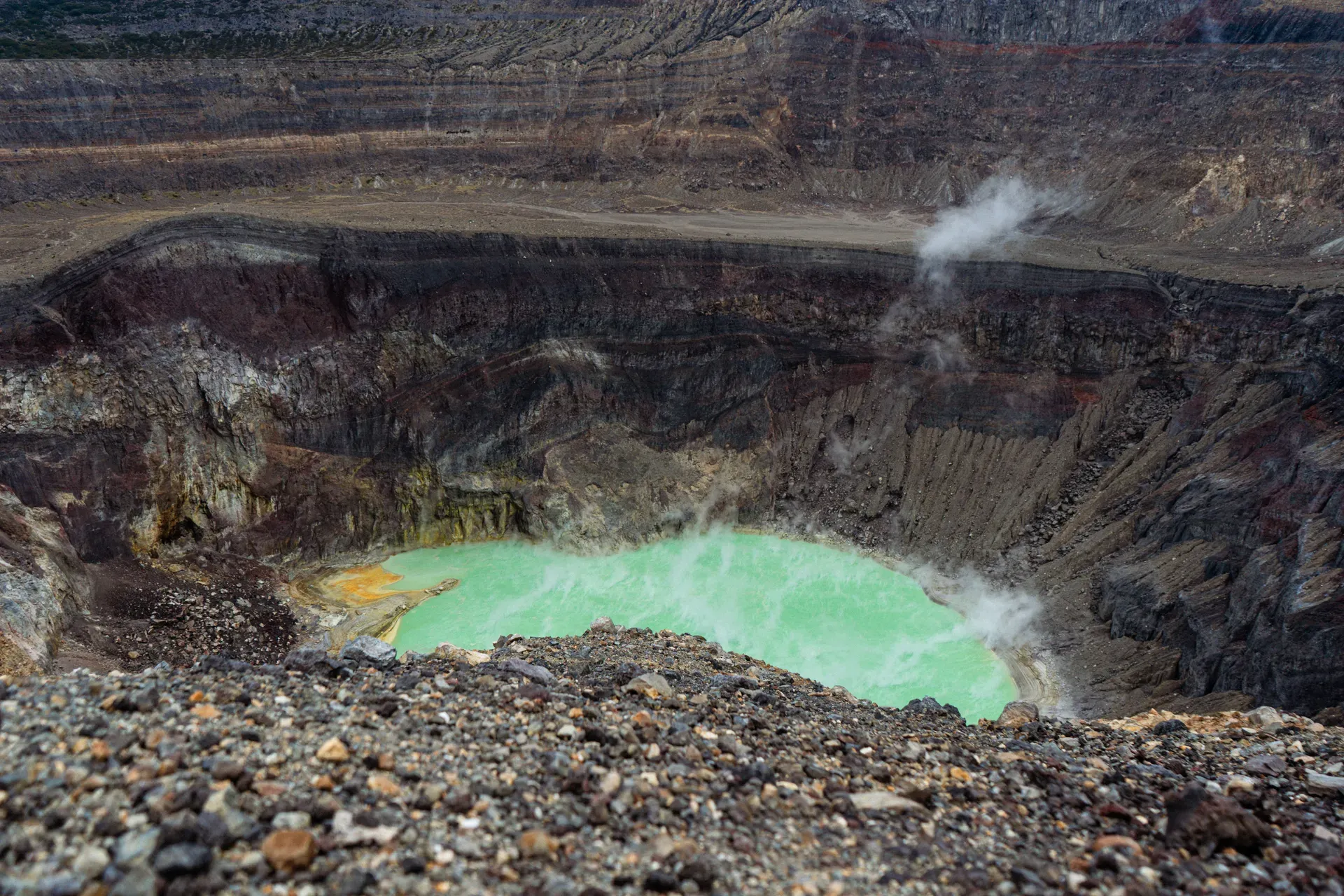
Foreign adults pay $15 USD to enter the park, which opens daily from 8:00 AM to 4:00 PM. Tickets are not sold at the gate, requiring visitors to book a strict 20-minute entry time slot online in advance.
Poás Volcano National Park opens daily from 8:00 AM to 4:00 PM year-round. Visitors must secure a specific 20-minute entry time slot online prior to arrival. Crater visibility drops sharply after 10:30 AM, making the 8:00 AM reservation the most reliable choice before thick fog rolls in.
Swipe to see more
| Day | Hours | Note |
|---|---|---|
| Monday–Sunday | 08:00–16:00 | Last entry at 14:00. Mandatory pre-booked 20-minute time slot required. |
The park remains open during all national and religious holidays, maintaining its standard operating hours. No seasonal closures occur, but heavy rainfall between May and November frequently obscures the crater and leaves trails muddy.
Foreign adults pay $15 USD for admission, plus applicable taxes. Costa Rican citizens and residents enter for 1,000 colones. Visitors must purchase tickets online through the official SINAC website in advance, as park rangers do not sell passes at the gate.
Swipe to see more
| Category | Price | Note |
|---|---|---|
| Foreign Adult | $15 USD | Plus taxes; online booking only via SINAC |
| Foreign Child (2-12) | $5 USD | Plus taxes; online booking only via SINAC |
| Costa Rican Adult & Resident | 1,000 CRC | Online booking only via SINAC |
| Costa Rican Child (2-12) | 500 CRC | Online booking only via SINAC |
| Child (Under 2) | Free | Requires registration during online booking |
| Car Parking | 2,000 CRC (~$4) | Paid on-site at the park |
No regular free entry days exist, though children under two always enter at no cost.
Planning your visit to Poas Volcano? Find tours with free cancellation and skip-the-line options.
View All ToursThe best time to visit Poás Volcano is during the 8:00 AM entry slot between late December and late April. Clear morning skies during these dry season months provide the highest chance of seeing the active crater lake before thick fog rolls in. Crowds peak by mid-morning, making the earliest 20-minute window essential for both better visibility and fewer people on the viewing platform.
Swipe to see more
| Period | Crowd Level | Recommendation |
|---|---|---|
| Early morning (08:00–09:00) | Low | Book this slot for the clearest views of the turquoise acid lake before the daily cloud cover arrives. |
| Mid-morning (09:00–10:30) | High | Expect peak visitor numbers and increasing mist that often begins to obscure the 300-meter-deep main crater. |
| Late morning (10:30–12:00) | High | Visibility drops sharply during these hours as thick fog frequently blocks the viewing platform entirely. |
| Early afternoon (12:00–14:00) | Moderate | The final entry slots carry a high risk of heavy rain and zero visibility, especially from May to November. |
A typical visit to Poás Volcano lasts 1.5 to 2.5 hours. Walking both the main crater and Botos Lagoon trails takes about two hours, while photography-focused trips often push past three. Park rangers strictly enforce a 20-minute maximum stay at the main overlook to limit exposure to toxic sulfur gases.
Reserve the 8:00 AM entry slot to maximize your chances of seeing the turquoise acid lake. Crater visibility drops sharply after 10:30 AM as thick fog rolls over the 9,000-foot summit. The dry season from late December to late April offers the clearest morning skies.
Cellular service fails frequently at the park entrance. Screenshot your official SINAC ticket confirmation QR code before leaving your hotel so rangers can scan it. You must book this 20-minute entry window online in advance using the full names and passport numbers of everyone in your group.
Temperatures drop significantly at the high-altitude cloud forest. Wear closed-toe trail runners for traction on the muddy Botos Trail and pack a high-quality rain jacket. Keep a microfiber cloth handy to wipe away the constant condensation that forms on camera lenses from the rapid temperature changes.
Gas stations do not exist near the park entrance. Fill your vehicle's tank in Alajuela before navigating the narrow, steep mountain road via Route 712. The continuous uphill climb burns significantly more fuel than standard highway driving.
Park rangers strictly enforce a 20-minute limit at the main crater overlook to minimize exposure to toxic sulfur dioxide and hydrogen sulfide gases. You must wear the provided safety hard hat at all times to protect against sudden phreatic eruptions. Bring your own reusable water bottle and snacks, as food vendors are banned inside the trail system.
Yes, mandatory advance tickets are only available through the official SINAC website. Park gates do not sell admission. You must select a specific date and a 20-minute entry slot, providing full names and passport numbers for all attendees.
Foreign adults pay $15 USD and children aged 2 to 12 pay $5 USD, plus applicable taxes. Costa Rican citizens and residents pay 1,000 colones for adults and 500 colones for children. Infants under 2 enter free.
Poás Volcano National Park operates daily from 8:00 AM to 4:00 PM, including holidays. Rangers cut off the last entry at exactly 2:00 PM.
Park rangers restrict crater viewing to exactly 20 minutes per group of 56 people. This strict limit minimizes your exposure to toxic sulfur dioxide and hydrogen sulfide gases.
Book the 8:00 AM slot for the highest chance of clear skies. Thick clouds and fog typically roll in after 10:30 AM, completely obscuring the 1.5-kilometer-wide crater and its bubbling acid lake.
Parking costs 2,000 colones (about $4) per car and 1,000 colones per motorcycle. You pay this fee on-site, separate from your online admission ticket.
All visitors must wear a hard hat provided at the reception area. The park mandates this safety gear to protect against sudden phreatic eruptions that eject steam, ash, and acidic water.
Browse verified tours with free cancellation and instant confirmation.
Find Tours